
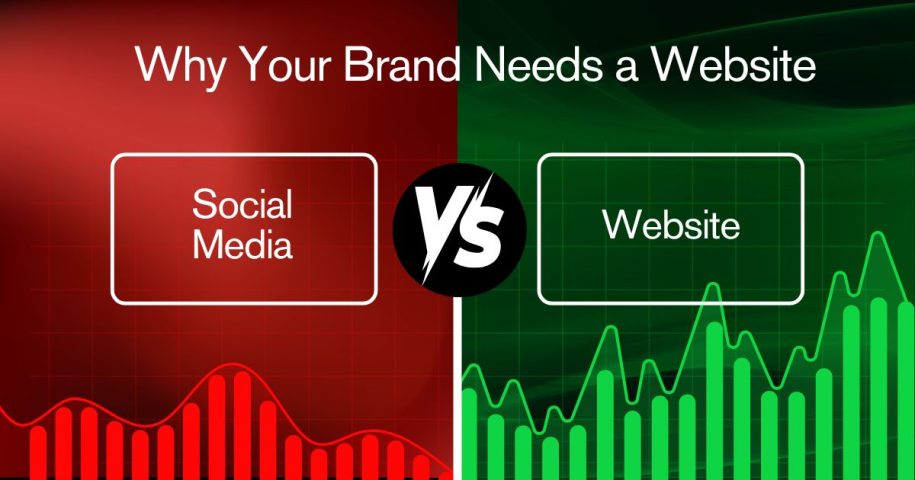
The digital economy is reshaping how individuals build careers, businesses, and reputations. In this environment, digital identity is a strategic asset. Yet millions of Nigerians depend solely on social media platforms that they do not control.
Across Nigeria, millions of talented individuals build their identities on platforms they do not control, social media accounts, marketplace profiles, and third-party applications. These platforms help people connect and create. But they also raise an important question: Who truly owns your digital identity?
In today’s increasingly digital economy, professional opportunities are often influenced by an individual’s online presence. Consider, for instance, a young Nigerian designer applying for international freelance work. When a potential client searches for the designer’s name online, the results that appear may vary widely from a simple social media profile to a fragmented digital presence spread across multiple platforms. In contrast, a well-structured professional website hosted on a personal domain presents a more credible and organized representation of the individual’s skills and portfolio. As search engines frequently serve as the first point of evaluation for employers, clients, and collaborators, these initial impressions can significantly influence professional outcomes. At this critical moment, a simple yet powerful digital asset the domain name, can play a defining role in establishing credibility and professionalism.
Owning a .ng domain name provides individuals and organizations with the opportunity to control their online identity, present their work in a structured manner, and build trust with both local and international audiences. Beyond serving as a web address, a domain name represents a digital asset that supports visibility, brand ownership, and long-term reputation management. For Nigerians seeking to actively participate in the global digital economy, securing a .ng domain is therefore more than a technical choice; it represents a declaration of identity, a form of digital ownership, and a foundational step toward building a sustainable digital future.
This article examines the growing importance of digital footprint ownership in an era where online identity increasingly shapes professional and entrepreneurial opportunities. It explores the role of domain names in strengthening personal and professional branding and highlights how .ng domains contribute to reinforcing Nigerian digital identity and identify the opportunities that domain ownership creates for youth, entrepreneurs, and professionals.
The Parable of the Digital Tenant
Imagine a scholar who spends twenty years depositing their original research into a library they do not own. One morning, the library changes its entry requirements, hides the scholar’s books in the basement, or worse, closes its doors entirely.
This is the reality for millions of professionals today. We are witnessing the era of “Digital Sharecropping.” We provide the content, the engagement, and the data that give social media platforms their multi-billion-dollar valuations, yet we operate on “rented” land. When the algorithm shifts, our visibility and, by extension, our professional equity—is liquidated without our consent.
The Theory of Platform Dependency
In academic terms, this is a crisis of path dependency. By building exclusively on third-party ecosystems, professionals create a single point of failure.
- Algorithmic Governance: Your professional reach is governed by black-box mathematics designed to maximize platform retention, not your personal brand’s growth.
- Data Siloing: Social platforms own the relationship with your audience. You cannot “export” your followers’ attention if you decide to move.
- The “Lindy Effect”: A concept in fragility theory suggests that the longer something has survived, the longer it is likely to survive. While platforms like TikTok or X are subject to the whims of fashion and regulation, the Domain Name System (DNS) has remained the bedrock of the internet for decades.
- Platform Capitalism: A model where the platform owner captures the majority of the value created by its users. When an algorithm changes, your “reach” (your professional equity) can be devalued by 50% or more overnight. This is Asset Fragility.
- Digital Sovereignty: The power of an individual or entity to direct their own digital destiny. This is rooted in the possession of independent infrastructure—specifically, the Domain Name System (DNS).
From “Renting” to “Owning” with .ng
True digital sovereignty requires a shift from being a user to being an owner. This begins with the transition from a profile to a Domain-Centric Identity.
In the Nigerian context, the .ng country code Top-Level Domain (ccTLD) is more than a technical suffix; it is a digital title deed. Registering a domain like YourName.ng or Company.com.ng provides three critical layers of professional protection:
- Identity Persistence: Unlike a social media handle that can be reclaimed or banned, a domain is a legal asset. It ensures that your “Home Base” remains constant even as the social media “outposts” change.
- Intellectual Property Centralization: Your best thinking articles, portfolios, and white papers should live on your own domain. Social media should be the distribution channel, not the destination.
- Localized Authority & Trust: Academically and commercially, there is a “Trust Premium” associated with localized domains. A .ng extension signals compliance with local digital standards and contributes to the growth of Nigeria’s digital economy.
Consider three Nigerians navigating the digital space in different ways. Tunde, a freelance software developer, relies solely on platforms such as LinkedIn and Twitter to showcase his skills. Ada, a fashion entrepreneur, has built her entire brand presence on Instagram. In contrast, Sadiq, a young designer, has established a personal portfolio through his own website, sadiqdesign.ng.
When a potential global client searches their names online, the outcomes differ markedly. Tunde’s profile appears among thousands of similar listings on professional networks, making it difficult for him to stand out. Ada’s Instagram presence may showcase her work, but it can be challenging for clients to verify the authenticity or professionalism of her brand.
Meanwhile, Sadiq’s personal website appears prominently in search results, presenting his portfolio, achievements, and contact information in a structured and professional manner. The distinction among these scenarios lies in one key factor: ownership of digital identity. In the digital age, a domain name functions as a permanent online address, providing individuals with greater control over how their professional identity is presented and discovered online.
The Architecture of a Sovereign Footprint
To own your footprint, you must adopt a Hub-and-Spoke Model:
- The Hub: Your personal or corporate website (e.g., www.olumide.ng). This is where your canonical content lives.
- The Spokes: Your LinkedIn, X, and Instagram profiles. Use these to drive traffic back to the land you own.
This ensures that if a “Spoke” breaks, the “Hub” remains intact. You are no longer at the mercy of a “Landlord”; you are the architect of your own digital legacy.
While social media is a powerful distribution tool, it is a precarious storage tool. If your LinkedIn or “X” account is the only place your professional legacy exists, you are one policy update away from digital insolvency.
As we navigate the complexities of the 21st-century economy, we must ask ourselves: Are we building on sand or on rock? Digital footprints are the currency of the future. By securing a .ng domain, you are not merely participating in the internet; you are asserting your right to own your space within it. It is time to move beyond the transient nature of “posts” and “likes” toward the enduring stability of a sovereign digital identity.
Your name is your brand. Don’t leave it in the hands of an algorithm.